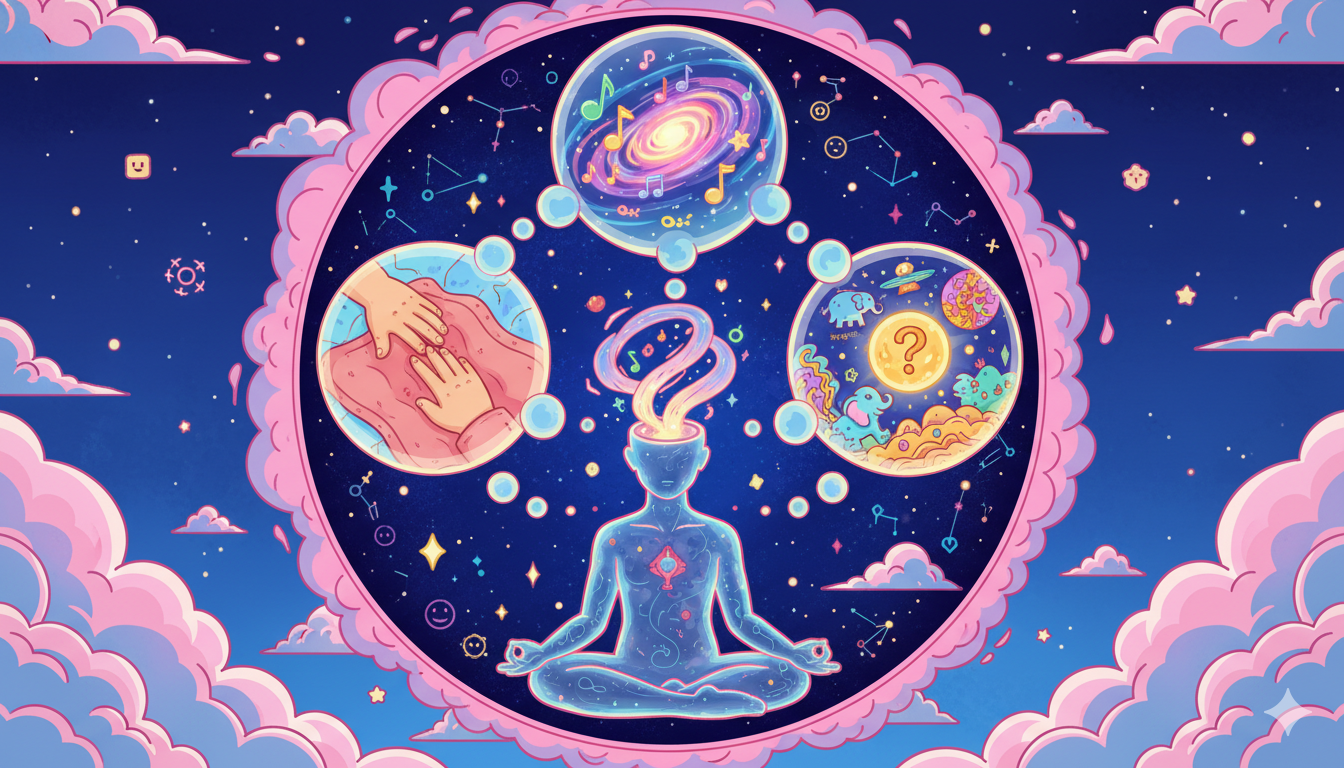
We often encounter two opposing groups of people who speak in contradictions when discussing Indian philosophies (Darshanas), where one side dismisses the entire Indian traditions as mere mythology. To this group, the profound insights written by ancient seers are just stories or poetry created by people who simply imagined the world in creative ways.
Then comes the “mystic” group, who often react with a fight-or-flight response to logic and claim everything is literally mystical, interpreting ancient texts like Hollywood-inspired Bollywood movies where ghosts, demons, and flying horses are strictly physical realities.

I must say that both are wrong because mythology is often just human imagination projected onto the world, while mysticism is the error of mistaking metaphors for literal physical objects.
Related Posts:
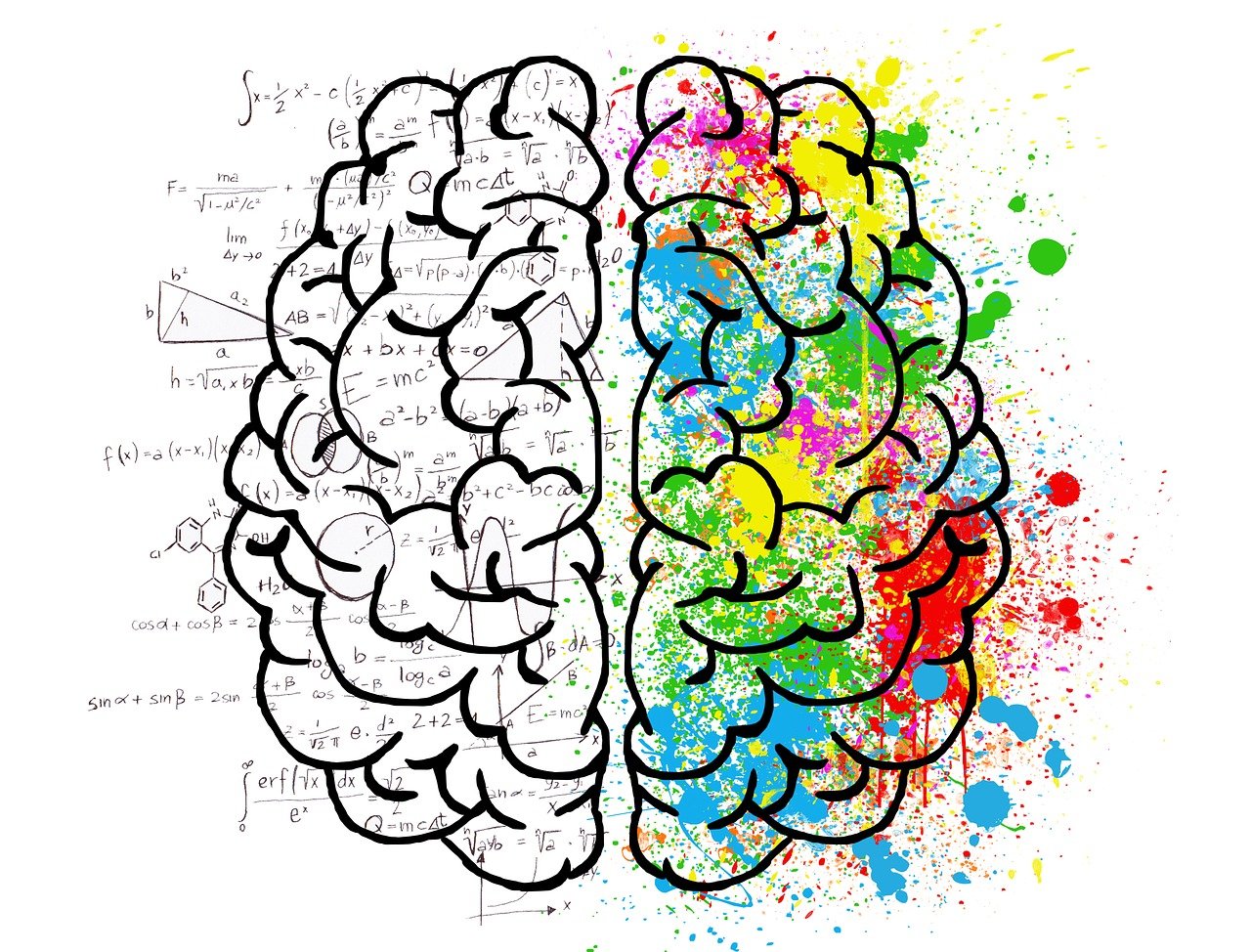

For example, when the texts say “I am everything,” the mystic might take this in a delusional, literal sense rather than a philosophical (Darshaanik) one.
The truth lies in the middle because Indian Tradition is actually Phenomenological, meaning it is based on first-person experiences of reality which were then organized into a mass-readable form by the lineage of Vyasa. It was previously collected by the lineage of the Gurus.
Phenomenology is the study of structures of consciousness and how things appear to us from a first-person perspective rather than just how they exist physically.
It is just another research methodology.
The Vedanta suggests that there is no reality other than Brahman, and in the last article we learned about Pratibimbavada, which is the doctrine that the individual consciousness (Atman) is merely a reflection of the Supreme Self.
Now here is the twist regarding this concept.
When we speak of the image of Brahman, it also applies to biological images because you are created in the image of your parents based on the dominant trait (remember evolution for this word “trait”), and they were created in the image of your grandparents. You contain a reflection of the reflections , so in this way you hold meta-reflections within you.
Evolutionary science says this is all due to genes, but science is often reductionist and stops at the physical mechanism by saying DNA explains everything. However, this is not the only way to view it because if a child suffers from a hereditary condition carried forward from ancestors, the phenomenological question becomes whether this can be controlled through the path of consciousness. Here the method of inquiry changes.
We do not tend to move back towards the original conscious self in standard evolution, but Indian philosophy (Darshanas) asks us to do exactly that.
Consider that a human being getting attracted to a partner with good features is certainly the result of natural selection and competition for survival which is rarely understood by the conscious psyche.
We see this practically when a man is instinctively drawn to a female who has enhanced her features with makeup, or when a female is attracted to a handsome man, or even when we are drawn to specific personality traits like an introverted or extroverted nature or a man of integrity. There is much more to it that remains unexperienced through actual awareness; rather, there is an unfolding of Karma within endless loops.

Let me tell you a secret: awareness of these processes can end the loop of Karma, and Indian tradition balances this perfectly.
Bharatiya knowledge offers a higher step because a relationship becomes permanent only when the attraction is conscious rather than based solely on physical appearances or biological drives. The relationships are always inner than outer. This is called the transition from Karma to Kriya.
With, the observation of Brain i.e. thoughts and the inner awareness of the hormones along with other experiences, life becomes great but the practice is a must.
Rigveda did not invent Indra as a comic-book hero. Indra names the inner capacity that organizes experience, the drive that brings sensations, judgments, and choices into being. When you choose whom to trust, when your chest tightens before speaking, when courage or fear arrives, those are not random. Naming them made them talkable across generations. Practices and stories were ways to hand down a training in attention, not simply status labels.
So no Mysticism at all.
Even Maya is not a cosmic fraud. It is the way the formless shows as form. Awareness itself has no shape. Everything that appears does. The variety you meet is the play of form on the ground of awareness. Again that’s Phenomenological.
Come back to Pratibimbavada once again.
You just knew, you are a reflection shaped by family, societal, and environmental patterns. Now, this is why you sometimes react before thought has a chance. You find yourself attracted to a certain style because it feels familiar, because some ancestor once responded that way and the echo travelled down. That is ordinary. The surprising thing is this. Reflections also can be altered by attention along with Karma. Attention is the simple tool the texts teach. It is not mythological. It is disciplined seeing. When you see how desire forms, how it tightens the body, how it narrates itself, you are not helpless. You can choose how the reflection continues.
Try one small experiment right now. For one day notice the moment you feel pulled toward someone, or the instant irritation rises before a meeting. When that moment appears, pause and name it with one short word. Where does it live in your body? What does it want? Say the name quietly and watch without judgment.
Name it and let it go.
That’s importance of Naam or the Name.
You are practicing the same method the ancients taught. That is how theory becomes lived skill. You become Mantra drasta or the Rishhi, which again is not mystical.
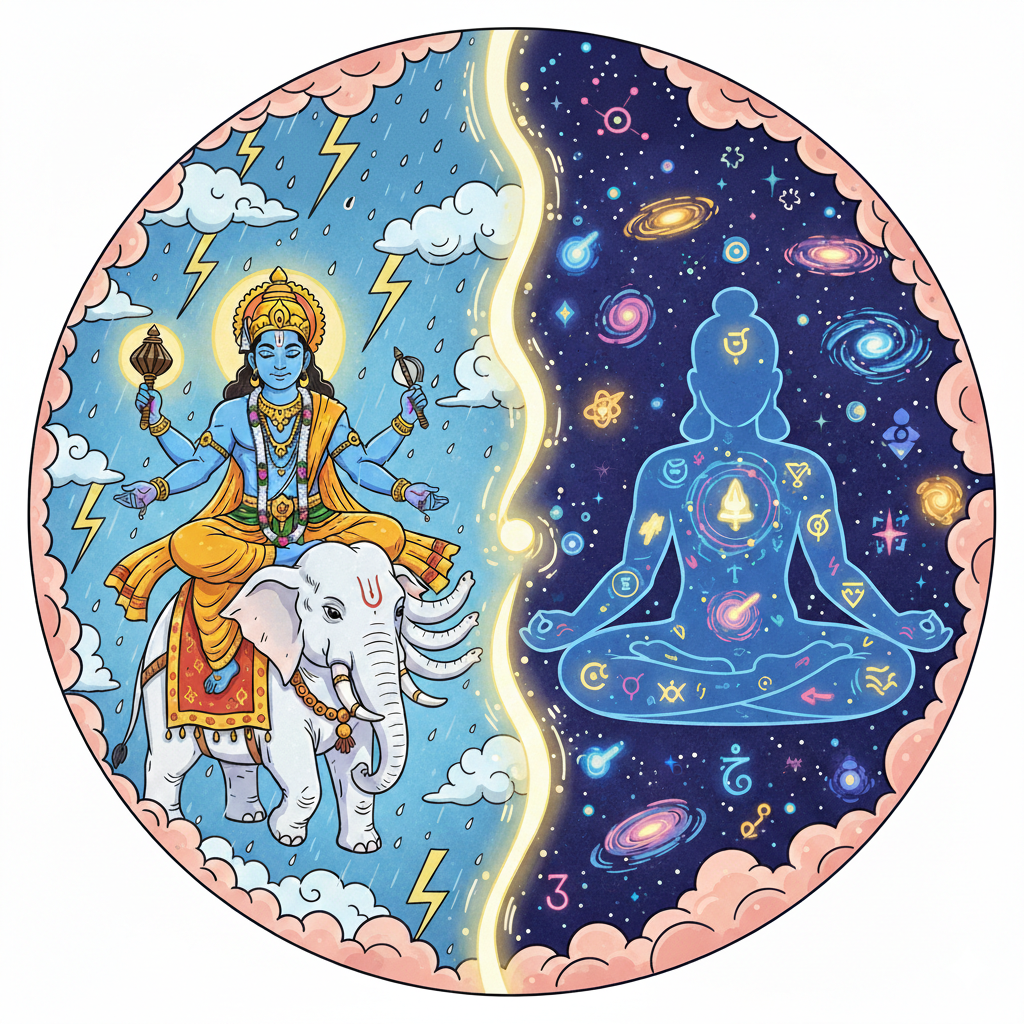
Read a Rig Vedic passage slowly and watch what moves in you. Does a sense of duty rise? Does warmth appear around an idea? Does tightness cue a memory? If the text draws something inside you, it has done the old work. If nothing moves, that passage may still hold value for others, but it has not opened that door for you. This way of reading keeps the sacred honest and practical.
But perfect your attention first.
These teachings are not asking you to choose between myth or miracle. They are asking you to train attention, to notice the way experience repeats, to see your lineage inside your reactions, and to learn simple practices that change how the chain of reflections moves forward. That is where true freedom begins, not in rejecting stories as mere fairy tales and not in turning every text into literal ghost story. It is in looking, patiently and precisely, the way ancestors taught us to look.