Imagine a ladder leaning against the infinite. Its rungs disappear into a luminous mist that we call Samadhi, or the ultimate state of liberation. We often find ourselves staring at the top, wondering what it feels like to touch the clouds. Yet we rarely pause to inspect the ground upon which the ladder rests.
Is it possible that the most profound secrets of existence are hidden not in the complex postures or the breathless heights of meditation, but in the very first steps we take? Why do we focus so much on the destination while ignoring the basic physics of the ascent?
In the ancient traditions of Bharat, these foundational rungs are known as Yama and Niyama. They represent ethical restraints and internal observances that form the bedrock of a life lived in harmony. One might wonder why a spiritual seeker, intent on transcending the physical world, would need to concern themselves with social conduct or personal discipline.
Related Posts:


If the goal is pure spirit, why does the behavior of the body matter so much? The answer lies in the concept of Bharatiya jeevandrishti. This is a world-view where the individual is not an isolated island but a microcosm reflecting the macrocosm.To align one’s behavioral patterns with the cosmic rhythm is to acknowledge that our relationship with the five great elements, the panchamahabhoota, requires a discipline that begins long before one ever sits on a yoga mat. It is a journey that facilitates the transition from the stage of a student to that of a renunciant.

It represents a movement from Dharma, or duty, to Moksha, which is ultimate freedom. Without this alignment, the ladder has no stable ground. Without the ground, the climb is an illusion. But does this mean every seeker must follow the exact same blueprint? Is there a universal law that dictates these steps as mandatory for everyone? As we explore the vast landscape of ancient wisdom, a fascinating contradiction emerges. This challenges our linear understanding of progress.
Does every path require these same foundational steps?
If we look toward the Maitri Upanishad, we find a startling departure from the well-known eight-limbed path. In that specific tradition, a system known as Shadanga Yoga is introduced. This is a six-limbed method that curiously skips over Yama, Niyama, and even the physical postures of Asana.
How could these stepping stones be deemed non-essential by such a venerable source? Is it a shortcut, or is it a recognition of a different type of traveler? This suggests a diversity in spiritual methodology. It hints that the wisdom of the past is so vast that no single version of understanding can claim absolute authority. When the focus shifts instead to Pranayama, Pratyahara, Dhyana, Dharana, Tarka, and Samadhi, it invites us to ask a difficult question. Is it possible that for some, the ethical foundation is already so deeply ingrained that it need not be spoken of?
Or perhaps, is the internal heat of inquiry, known as Tarka, so powerful that it burns away the need for external rules? This diversity reminds us that if we believe there is only one way to reach the summit, we have only just begun our journey.
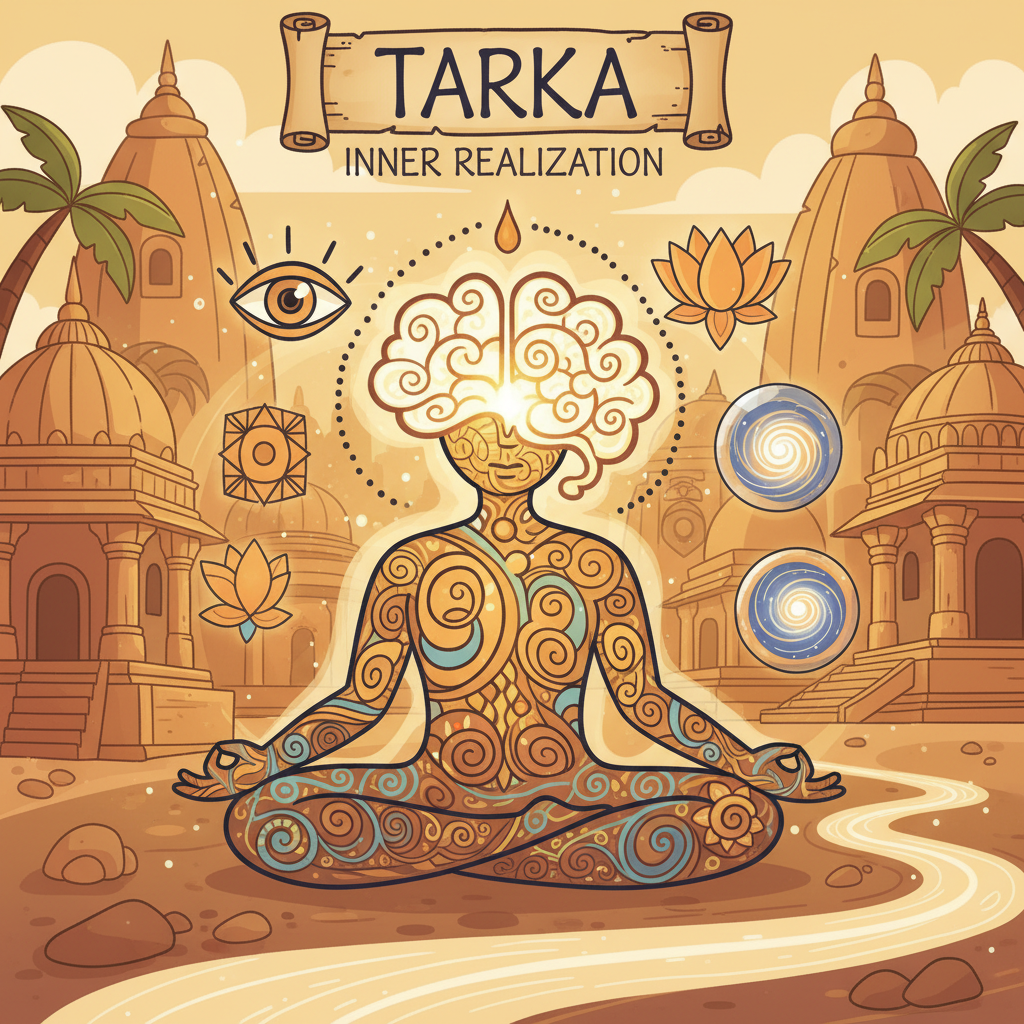
There are hundreds of margas, or paths, each tailored to the unique composition of the seeker. This leads us to a contentious crossroad in the history of practice. What is the role of the physical, and what is the potential for the ego to hijack the soul’s progress? Why did masters like Swami Vivekananda occasionally express a profound skepticism toward Hatha Yoga? To many, Hatha Yoga is the very face of spiritual practice today. Yet Vivekananda and others warned that it could inadvertently increase the practitioner’s ego.
How can a practice designed to liberate actually bind a person more tightly to their sense of self? The answer may lie in the intensity of the focus on the physical vessel. If one masters the body without the softening influence of higher Dharmic principles, the body becomes a temple for the self. The tatva, or the essential principle, is always more important than the vyavahar, which is the outward practice. If our ritualistic adherence does not lead to a shift in our inner vritti, the fluctuations of our consciousness, then we are merely moving furniture in a dark room.
The Dharmic essence is everywhere. It is a fragrance that should permeate the practice, rather than being a set of rules we check off a list. But how do we know which path is ours? The answer is found in the ancient psychology of the Gunas. These are the three fundamental qualities of Sattva, Rajas, and Tamas. Sattva represents purity and light. Rajas represents activity and passion. Tamas represents inertia and darkness. Each individual is a unique blend of these forces.Their prakriti, or inherent nature, dictates the safety and speed of their spiritual evolution.
What happens if a person who is naturally Sattvik, calm, clear, and harmonious, tries to use the brute force methods of Hatha or Tantra?
For such a soul, Yama and Niyama are not chores but a natural reflection of their state. They do not need intense, forced practices. Instead, an easy diet and gentle discipline allow them to progress steadily. Their journey might take longer, but they run almost no risk of inflating the ego. But what of those dominated by Rajas? This is the fire of ambition and the drive of the leader or the creator. For them, the quietude of Yama and Niyama might feel like a cage. They require a bit more force to channel their restless energy.
However, they must walk a fine line. The risk of ego-inflation is always present, lurking like a shadow behind their achievements. If they succeed, they reach their goal faster than the Sattvik type, but the danger of falling into vanity is significantly higher.
Then we must consider the most intense and misunderstood of all paths. This is the high-risk, high-reward game of Hatha and Tantra for those struggling with Tamas or overwhelming desires. If one cannot resist the objects of the senses, is there still a way? In the language of modern management, this is a pivot of the highest stakes. For those in the grip of inertia or heavy desire, the ancient masters prescribed force. This is the literal meaning of the word Hatha. It is a method designed to produce results with extreme speed.
It is intended to shock the system into a higher state of awareness. However, the risk is proportional to the reward. The danger of a massive increase in ego is real and present. It is like using a powerful medicine that can either cure or act as a poison.
This creates a spectrum of spiritual technology. The easy path is safe but slow. The forced path is fast but perilous. It reminds us that spirituality is not a one-size-fits-all garment. It is a custom-tailored suit that must account for the specific mix within each human heart.
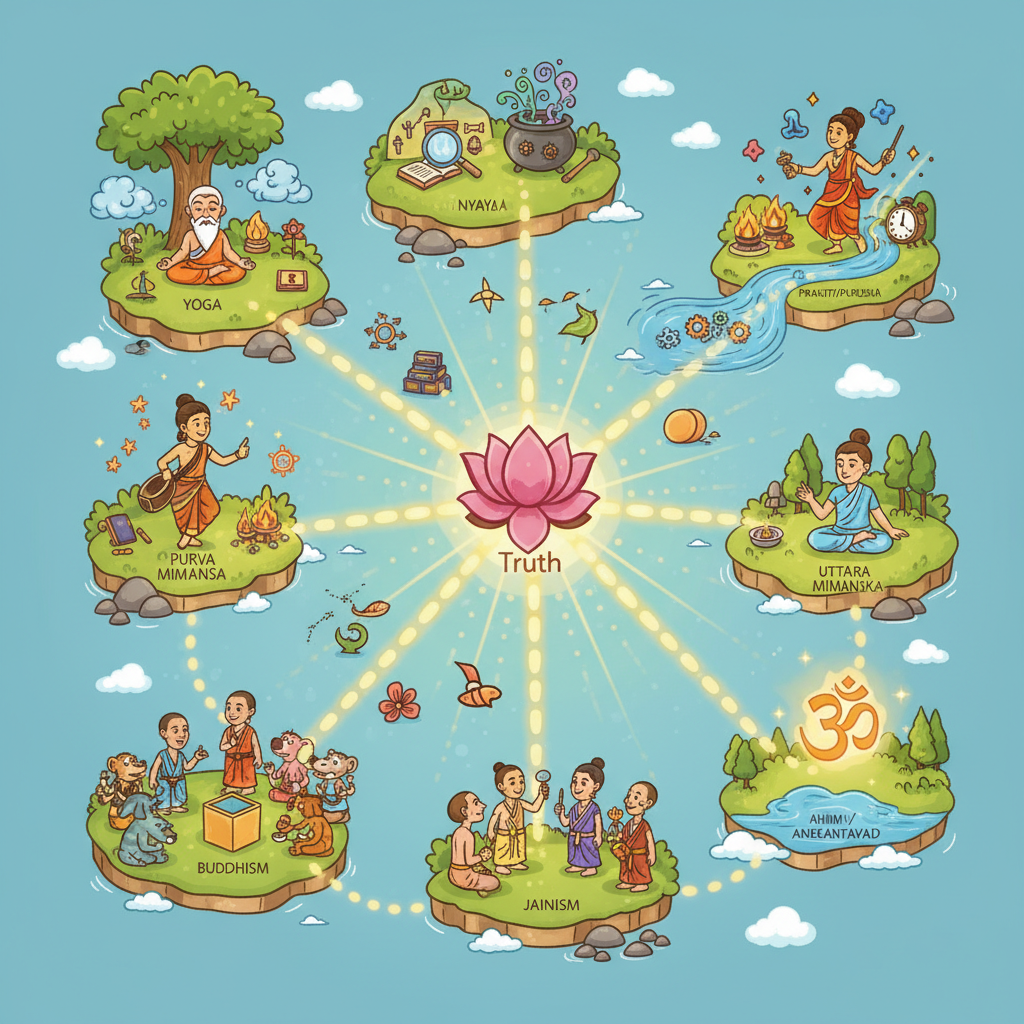
As we navigate these different paths, we eventually collide with the most fundamental question of all. What is truth? The poet-saint Kabir famously observed that there is no austerity equal to truth and no sin equal to falsehood. He suggested that when truth resides in the heart, the Divine resides there too. But this is not as simple as it sounds. If the ultimate Truth, or Satya, is omnipresent and all-encompassing, why do we find it so hard to grasp?
This brings us to a profound paradox presented in the Isha Upanishad. The wisdom warns that those who follow Avidya, which is ignorance or worldly knowledge, enter into blinding darkness. But those who are devoted purely to Vidya, or spiritual knowledge, enter into an even greater darkness.
How can Vidya lead to greater darkness than ignorance? It is because an intellectual grasp of spiritual truths, without the grounding of experiential reality, can create a sophisticated illusion. This is a spiritual ego that is far harder to dismantle than simple ignorance. It is the trap of the scholar who knows the map but has never walked the forest. The Isha Upanishad suggests a middle path. One must know both Vidya and Avidya together. By understanding Avidya, the workings of the material world, we cross over the fear of death.
By realizing Vidya, the phenomenological knowledge, we attain immortality. It is a dual realization. As one moves through this world, they must first understand the asatya, or the falsehood, before they can hope to touch the Satya, the final experiential truth. Ultimate Satya is everywhere but it cannot be easily understood. Only falsehood can be truly categorized and dissected by the mind. Hence, one needs to understand the nature of the lie before they can perceive the truth.
The ultimate Truth cannot be understood by the limited mind in the way we understand a mathematical formula. It can only be lived. Therefore, our first task is to examine the masks we wear. We must look at the lies we tell ourselves. We must scrutinize the ego we cultivate under the guise of holiness. Only by clearing away the underbrush of our own misconceptions can we see the path that has been there all along. The destination remains the same regardless of the method.
Whether we move with the slow grace of the Sattvik or the fierce intensity of the Tantrik, the goal does not change. It is a state where the microcosm of our individual breath finally dissolves into the macrocosm of the cosmic rhythm.The seeker finally realizes that they were the path all along. But to reach that realization, one must be willing to dismantle the very self they have spent years building. Is your spiritual practice a tool for transformation, or just another decoration for your identity?
If you find yourself obsessed with the rules of the journey, you may have forgotten the reason for the travel. If you ignore the rules entirely, you may find yourself lost in a wilderness of your own making. The balance is not found in a book or a specific technique.
It is found in the relentless honesty with which you face your own reflection. Ask yourself, in this moment, which quality of nature is driving your search? Is your practice a mirror for your aatma, or a mask for your ego?
The answer to that question is the first true step toward the light. It is the moment where the ladder disappears, and you realize there was nowhere to go but within. The silence that follows is not the absence of sound, but the presence.
Can we truly say we have started the journey if we have not yet faced our own shadows? Perhaps the greatest mystery is not what lies at the end of the road, but who it is that is walking it.
Each step is a question, and each breath is the answer.
