Category: Spirituality and Science
-

The Kundalini Code, Essence of “I” ness.
In last blog, we explored the Mahavidyas—the great cosmic wisdoms representing dormant feminine energy. But have you ever wondered what lies beyond this? This time, let’s dive into something equally intriguing—Kundalini. You’ve probably come across countless articles about Kundalini online, but how many really make you question your understanding of self? My approach will offer…
-
The Ecstasy of Truth; where Science meets Spirituality.
Science and spirituality are often seen as opposing forces, but what if they’re actually complementary? Let’s dive into how this intriguing argument holds up, especially when we look at the philosophy of Advaita Vedanta. Pramanas or Proofs in Advaita Vedanta In Indian Knowledge Systems, Advaita Vedanta stands out as a philosophy that resonates well with…
-
Hinduism and Science: The Scientific Relevance of the Vedas
The relationship between science and religion is often viewed as contentious, but this need not always be the case. For instance, when we delve into Hinduism, one of the world’s oldest religions, we find intriguing connections to modern scientific theories, principles, and discoveries. The ancient scriptures of Hinduism, the Vedas, are an excellent case study…
-
Science in Vedas, 3 top arguments where we fall.
Science in Vedas exists but this is conditional. There are various arguments made by many scholars and scientists like Schrodinger regarding this. However, this needs to be understood in a philosophical way. Meanwhile, you can read about our previous article on Quantum physics in Upanishads and Vedanta. Before that let’s understand what exactly is Science…
-

Soul after death, 7 unique perspectives.
Soul after death goes to either Heaven or Hell is a common idea of any mythology. However, there are amazing mysteries regarding the afterlife. Do you know human body is majorly made up of space? You read it right. Molecules are made up of atoms but there is a lot of space between these. But…
-

Purusha and Prakriti, a great union of the 2 forces.
Purusha and Prakriti are the manifestation of the single self in the same Universe. In Indian Philosophy, majorly in Sankhya, Purusha is regarded as Masculine (Shiva), and Prakriti is regarded as Power (Shakti). This is a dualistic view, however, unites to the singularity. It is in such a way that Purusha and Prakriti are incomplete…
-

Turiya and final samadhi, 4th consciousness wonder.
Turiya State, an Overview Turiya is the final stage of human consciousness. It encompasses all the three stages which we described in our previous articles. It is mentioned in Mandukya Upanishad with the other three stages being the final destination for the Yogis. However, there is also the mention of another stage or the fifth…
-

Sushupti Avastha of Human Consciousness.
The Sushupti Avastha is the third form of the human consciousness. The common translation found in most of the articles on the web is Deep Sleep. Metaphorically in some context, you can call it a deep sleep but literally, the meaning is something else. It is the dormant stage of human consciousness. In modern scientific…
-

Significance of Dreams, the Swapna Avashta
The second stage of human consciousness is the Swapna Avastha or the stage of Dream. The commonly referred word is sleep stage but the Sanskrit word used is Swapna whose literal translation is Dream, but not sleep. In this series of articles, the first one was the Jagrit Avastha or the stage of Wakefulness. It…
-
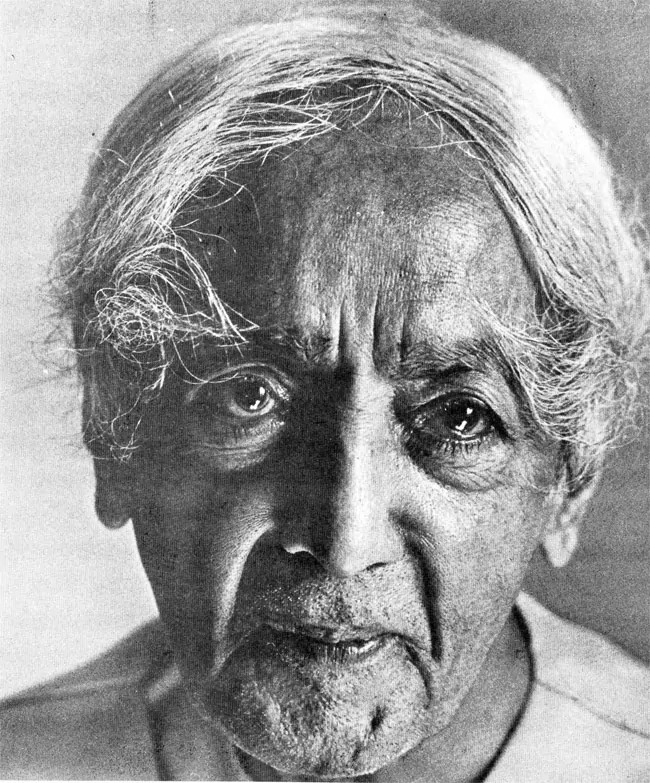
On Ontology Of Thought And Self: Reflections From J. Krishnamurti. Part-(2)
Seeing “As It Is” This is the point we are verily agnizing ourselves, not because someone said it. Such a state can’t be stagnant or concrete; instead, it’s evanescence and see-through one’s self from moment to moment. It doesn’t mean that in such a state, the mind is entirely free from all conditioning, it has…