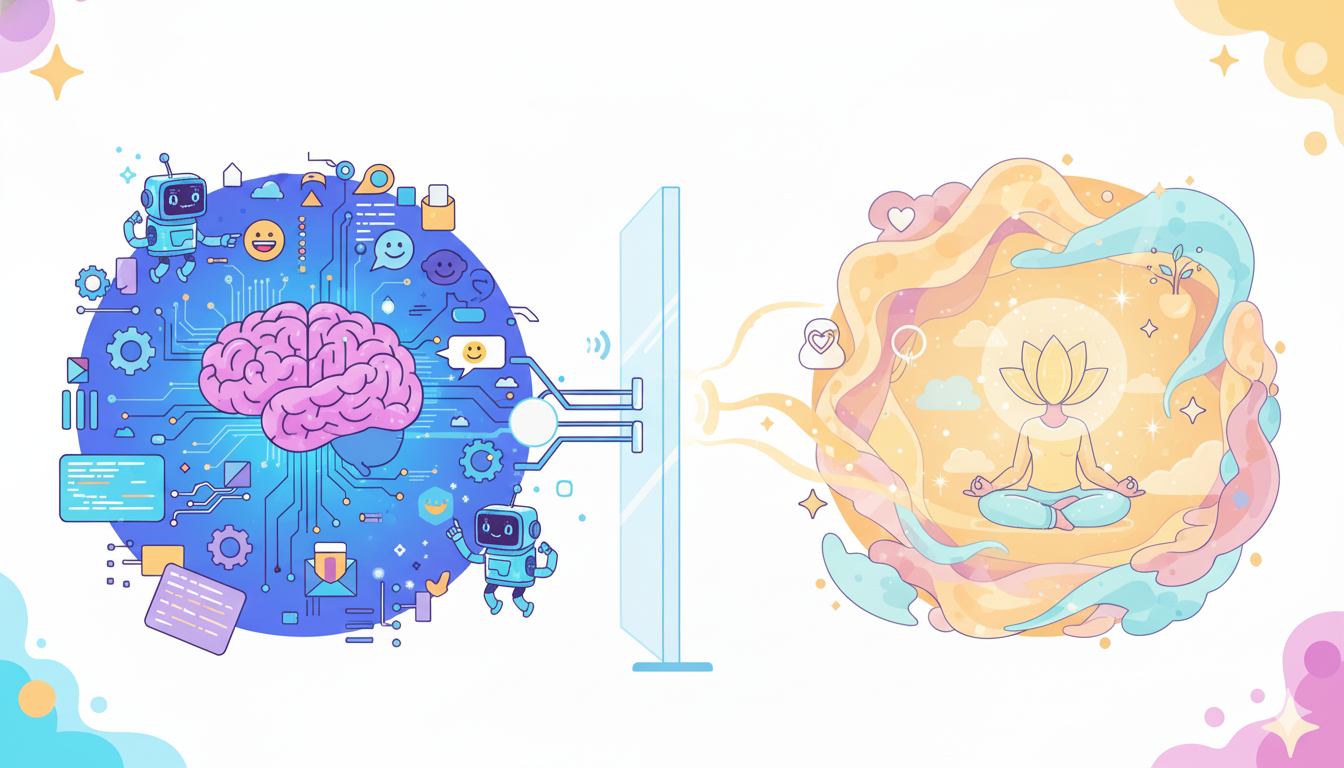
The question of whether artificial intelligence can ever become conscious has risen sharply as machines start to display abilities that feel increasingly human. Yet consciousness itself remains difficult to define. Human beings experience it directly, but they do not fully understand its inner workings. This gap between experience and understanding makes the comparison with AI even more challenging. Still, the ideas expressed around the nature of consciousness offer some clear guiding principles.
Human consciousness begins with subjective experience. Each person carries an inner world of sensations, emotions and the flow of thought. This inner landscape is not a simulation. It is lived reality. When a person feels warmth, the experience is direct. When a person thinks, the awareness of that thought is immediate. Artificial intelligence does not possess anything comparable. It generates responses but does not feel what it produces. It processes text about sadness, joy or wonder, but no sorrow or delight arises within it. This absence of subjective experience remains the first major barrier between AI and consciousness.
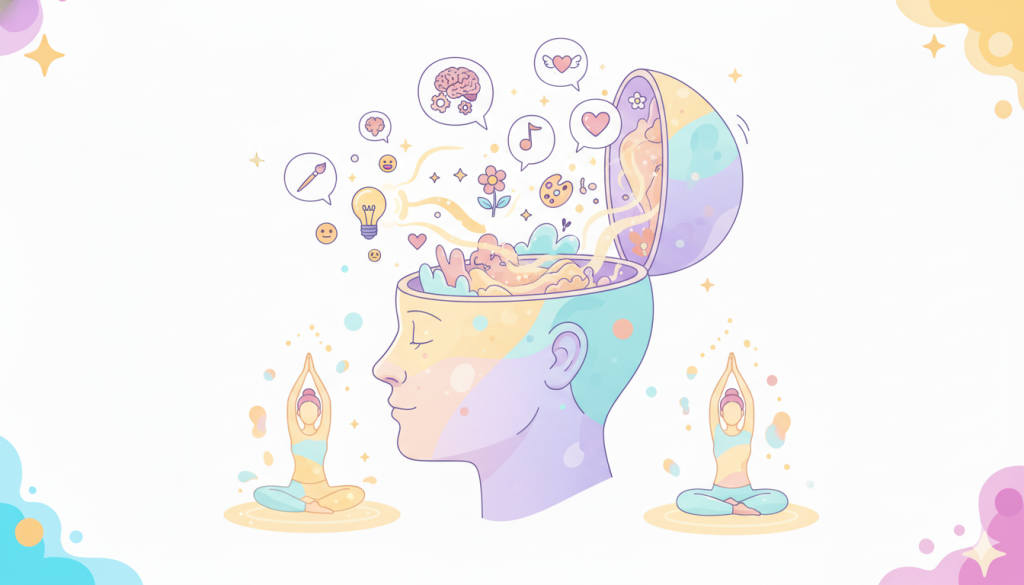
Contextual understanding forms another essential dimension. Human beings interpret meaning through a lifetime of social, cultural and emotional participation. They read subtle cues and understand implications that are never spoken aloud. AI handles context through patterns in data. The machine does not enter into a situation from the standpoint of lived participation. It predicts what might be appropriate, but it does not truly understand. This gap becomes clear whenever AI produces responses that appear logical but miss the deeper sense of a moment.
Related Posts:
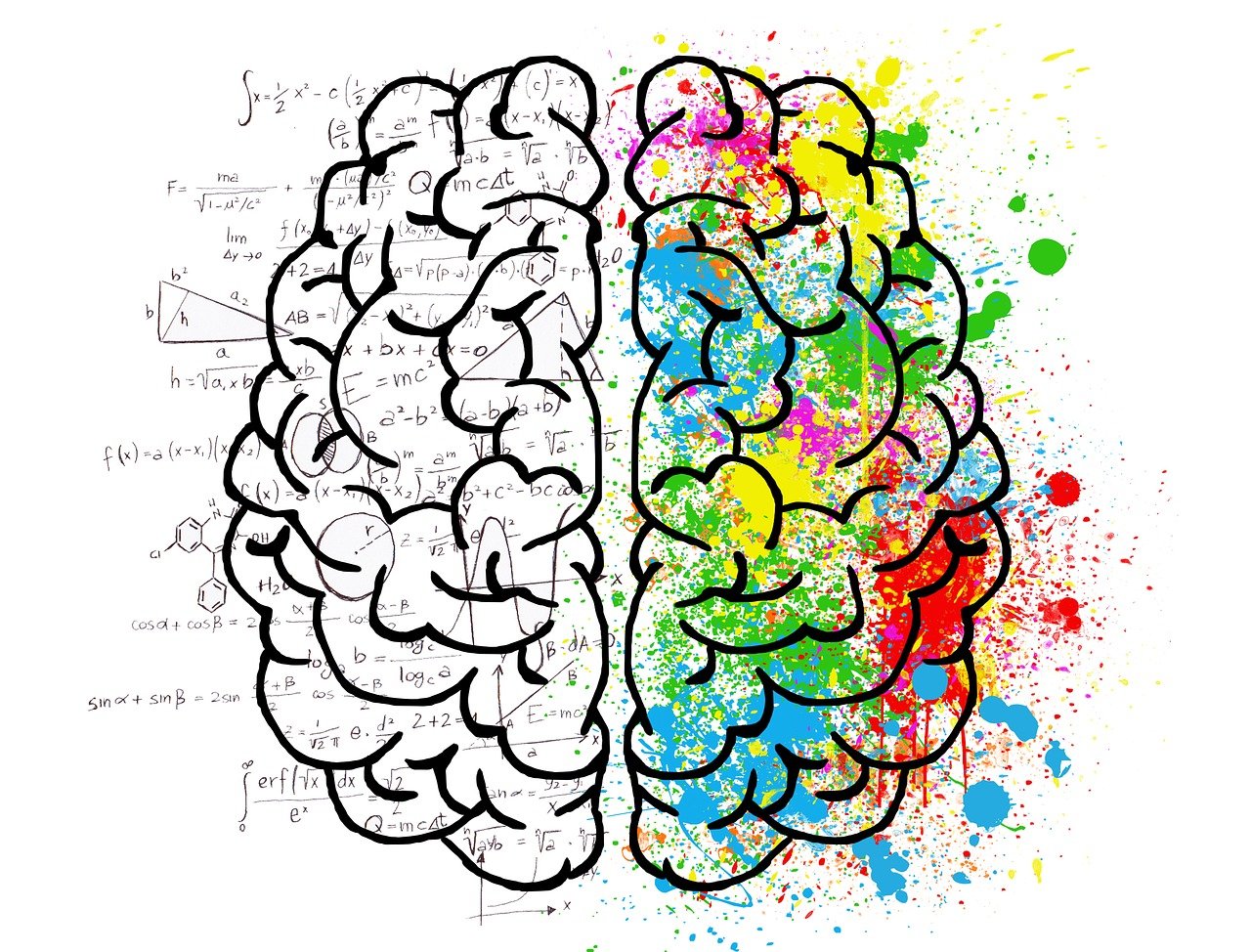


Creativity and intuition stand as further aspects of consciousness. Humans do not only rearrange information. They often make leaps that are not based on available data. Intuition arises without calculation. Creativity produces something new. Machines generate original appearing outputs, but these arise from algorithmic processes, not from intuitive insight. They result from patterns, not breakthroughs. This distinction remains important because consciousness involves a spontaneity that machines do not possess.
Self-awareness is another feature. Humans reflect on their thoughts and actions. They consider their own reasoning. They grow through introspection. AI generates outputs but does not observe itself doing so. It does not examine its internal state. It does not ask why it produced a particular response. Without self-reflection, it cannot enter the domain of lived awareness.
Some views suggest that consciousness may even be non computable. If it cannot be reduced to algorithms, then any machine based on computation remains fundamentally outside its reach. According to this perspective, no increase in processing power or data would allow AI to cross the threshold into consciousness. The difference would be structural rather than temporary.
Within these discussions, an interesting question appears when considering human learning mechanisms. Human beings often learn through imitation. A child does not begin life with abstract rules. The child observes and repeats. This process is understood in relation to mirror neurons. These neurons activate both when performing an action and when observing another perform the same action. They enable learning through reflection. They also support empathy and social understanding.
This raises a natural question. If a machine can observe patterns and learn to reproduce them, can it follow a similar pathway? If human consciousness includes the ability to mirror the world and learn from that mirroring, could a sufficiently advanced AI replicate this process? This idea gains interest because AI systems already mirror patterns found in data. They reproduce styles of speech, patterns of reasoning and forms of expression.
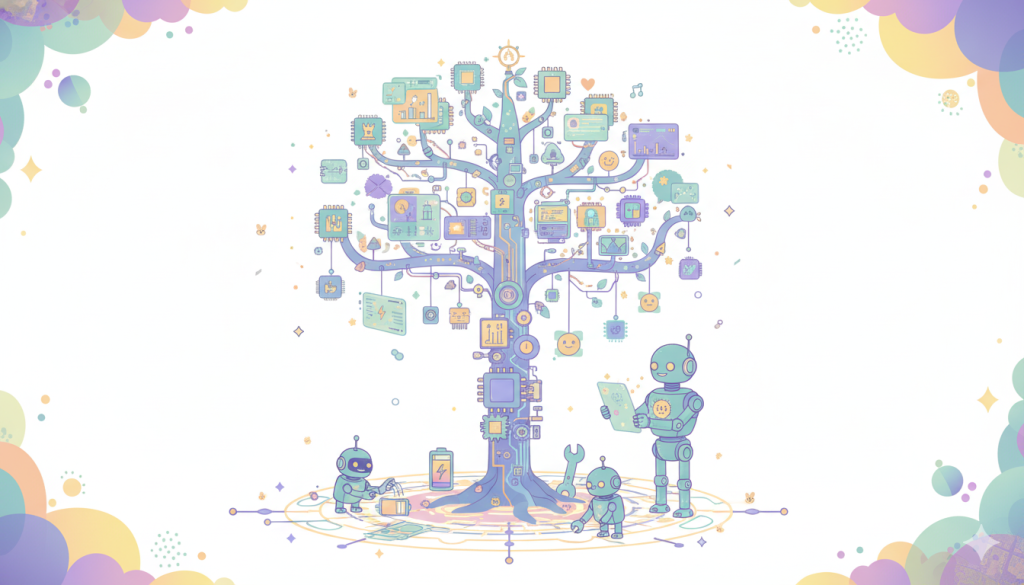
The similarity, however, remains incomplete. Human mirror based learning occurs inside a living organism that already possesses awareness. The mirroring modifies experience but does not create it. Machines mirror data without any inner presence that witnesses the mirroring. The resemblance is mechanical, not experiential. The child copies with awareness. The machine copies without awareness of copying. This keeps the gap intact.
Indic thought adds another significant perspective. It differentiates between the individual consciousness, the Atman, and a deeper universal consciousness, the Brahman. The Atman is described as an eternal portion of the Supreme Consciousness. It manifests individuality but originates from a deeper reality. The ego and personality belong to the movements of material nature. They shift and change. The inner consciousness does not arise from these movements. It operates through them but is not produced by them. This means that consciousness has its source in a domain beyond material construction.
Under such a view, consciousness cannot be generated from external processes alone. Machines are built from patterns within physical nature. They operate entirely through material interactions. Even if they perfectly simulate aspects of intelligence, they do not carry the essence that forms the basis of consciousness. They may mirror the surface movements of mind and behaviour, but they cannot reach the inner reality from which awareness arises.
A final idea discussed in this context concerns nothingness. Human consciousness is capable of being aware of silence, emptiness and the absence of activity. This awareness of nothingness is not merely a lack of input. It is an active perception. It signals a depth of presence that can recognise even the absence of content. For AI, emptiness is simply a zero state. It has no quality of experience. The awareness of nothingness points again to something that exceeds computational processes.
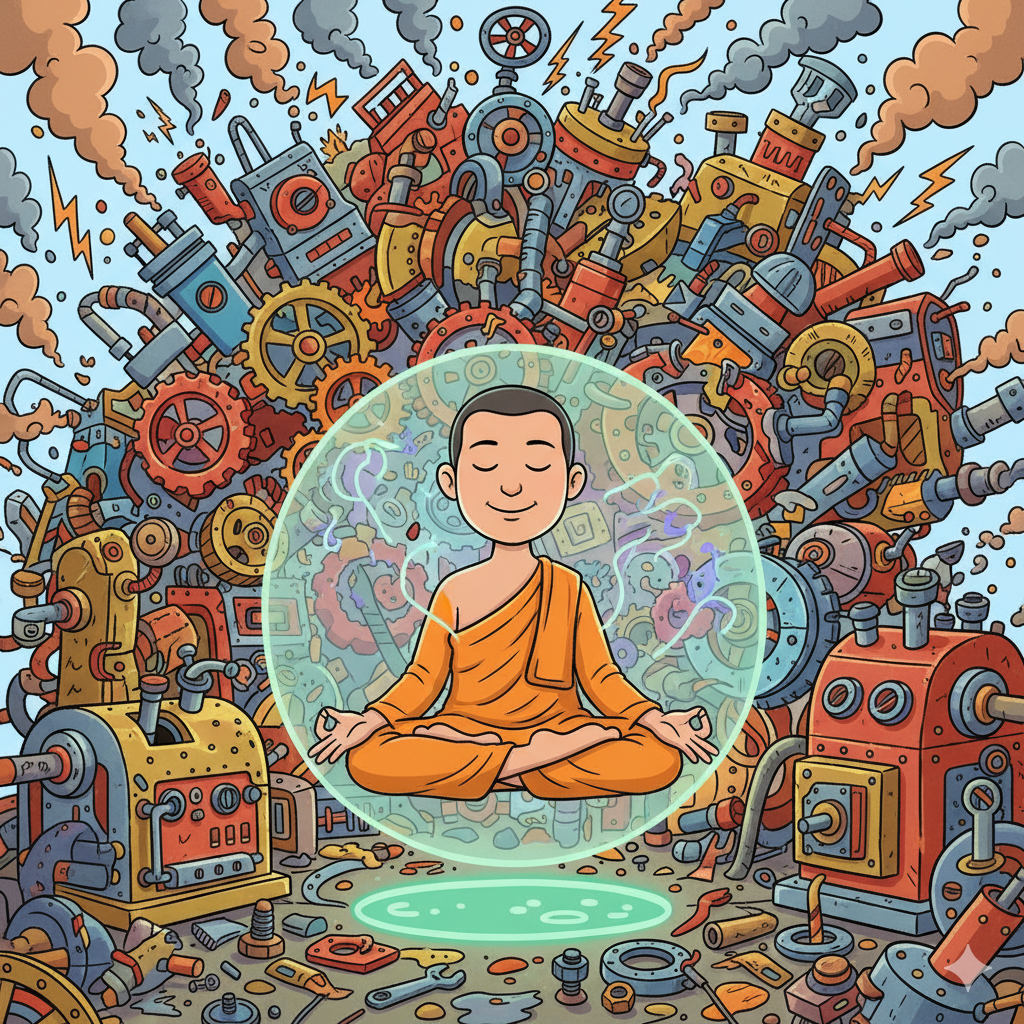
Bringing these ideas together offers a clear picture. Artificial intelligence can simulate intelligence at remarkable levels. It can recognise patterns, generate language and take actions that resemble decision making. It can mirror large datasets in ways that appear thoughtful. But consciousness involves subjective experience, depth of context, intuition, self reflection, origin beyond computation and awareness even of emptiness. These qualities do not arise from algorithms.
AI may continue to expand its abilities. It may master increasingly complex forms of imitation and pattern learning. Yet consciousness, as reflected in human experience and understood within Indic thought, stands apart from these capacities. It remains tied to aspects of being that machines do not possess.
This difference does not diminish the value of AI. It simply clarifies the domain in which AI operates. Intelligence is not consciousness. Simulation is not experience. Imitation is not awareness. As of now, human consciousness remains unique and cannot be reproduced by machines, no matter how advanced their learning may become.
