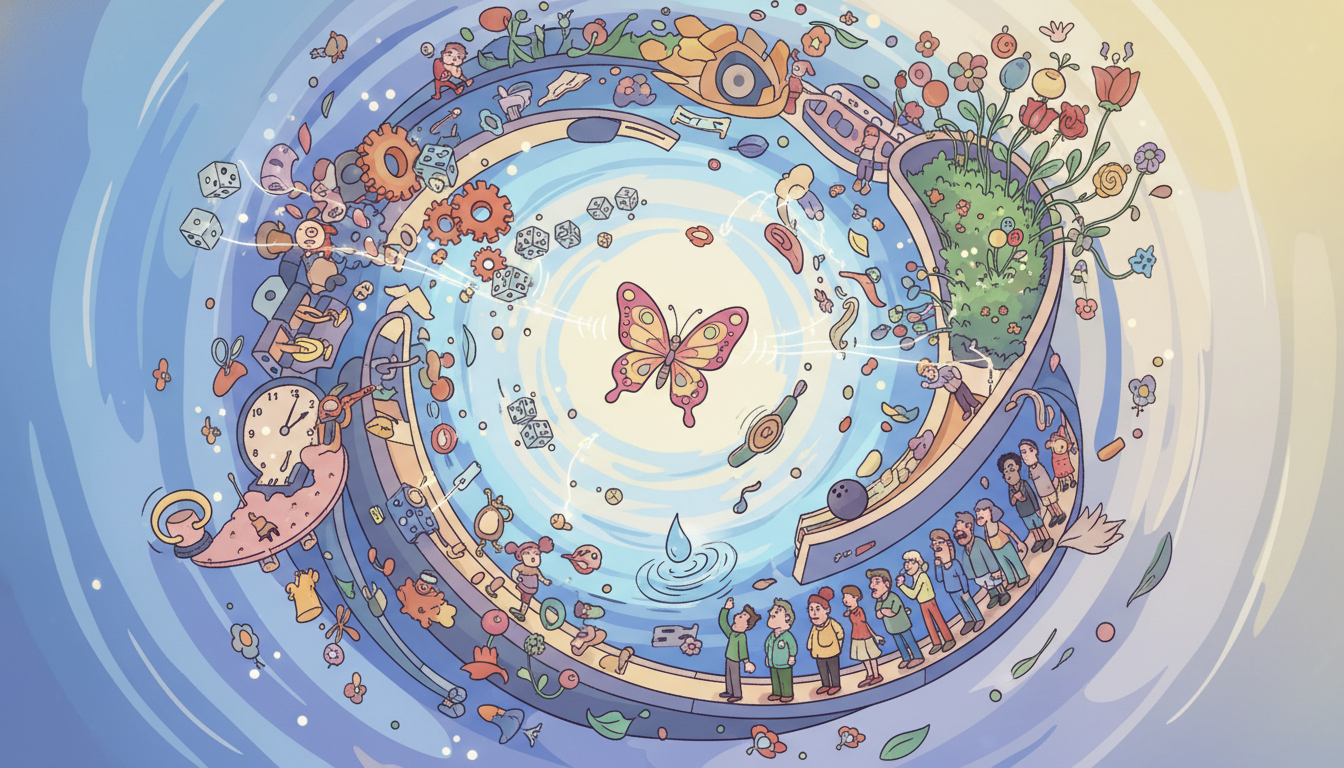
We spend our lives trying to build a quiet room where the world cannot reach us. We seek out safe jobs, comfortable relationships, and predictable routines because we are terrified of losing control. We are terrified of the moment our plans fall apart. We are terrified of chaos.
Nobel Laureate Ilya Prigogine understood this fear better than most. Born in Russia in 1917, his family fled the violent upheaval of the Russian Revolution when he was just a child. They eventually found safety in Belgium, but that peace did not last. World War Two erupted, bringing a different kind of darkness to his doorstep.
Prigogine spent his youth watching the predictable, orderly world around him shatter into terrifying, unpredictable fragments.
Related Posts:


Yet instead of running from this disorder, he dedicated his life to studying it. He became a physical chemist and asked a question that would change science forever.
Can something beautiful actually grow out of a broken system?
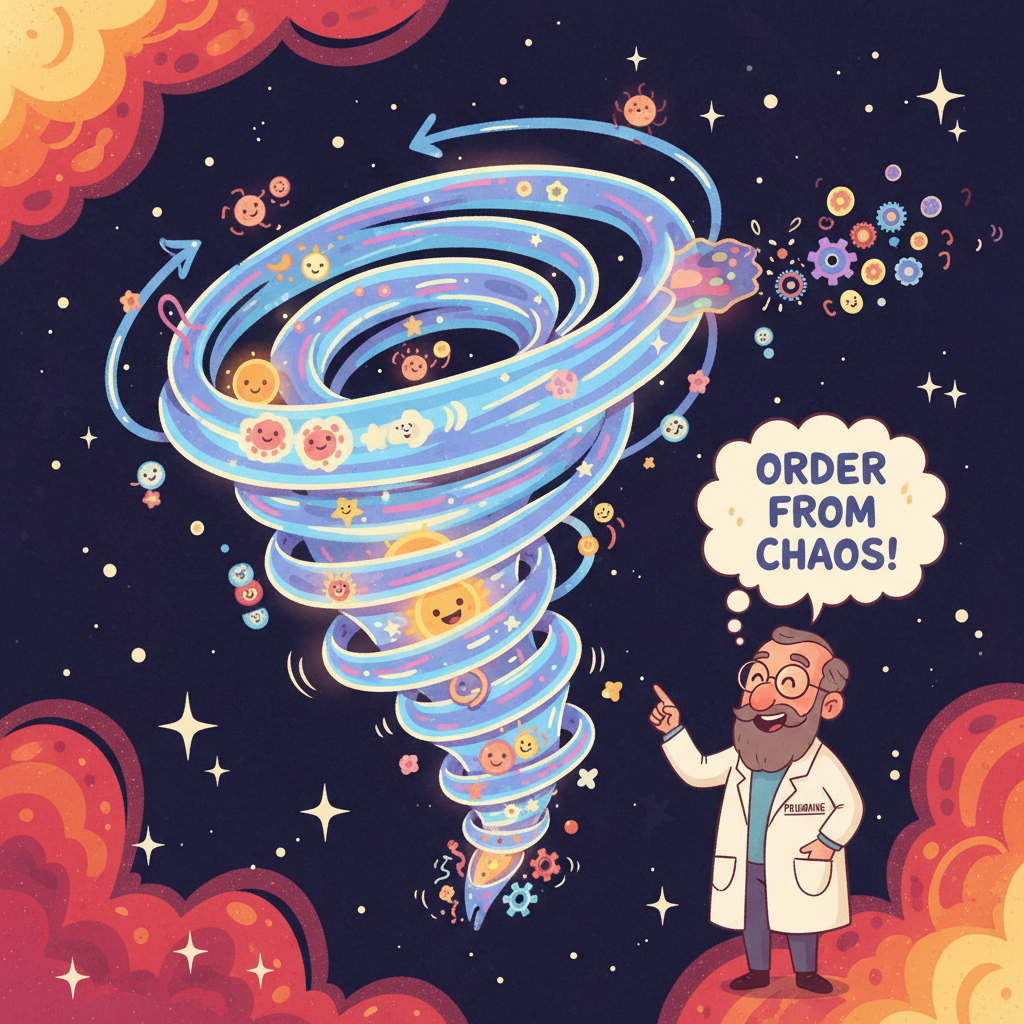
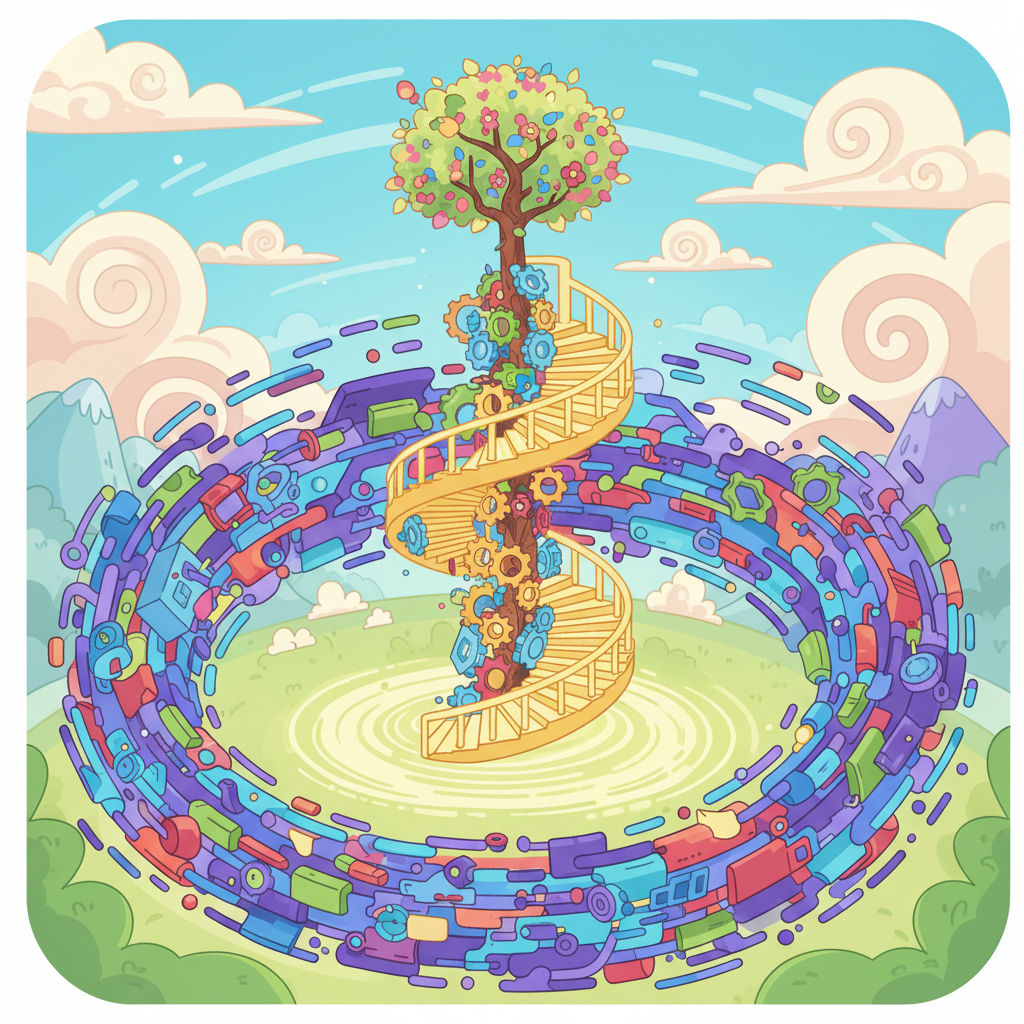
At the time, the scientific world believed that everything was slowly decaying into randomness. But Prigogine discovered something miraculous in the math. He found that when a system is pushed far away from its comfortable balance by the sheer force of chaos, it does not always fall apart. Sometimes the intense pressure forces the system to completely reorganize itself into a higher, more complex form of life. He called these dissipative structures. He won a Nobel Prize for proving mathematically what poets had always felt in their hearts.
Chaos is not the end of order. It is the birthplace of it.
You can see this exact truth written in your own bones. Millions of years ago, the oceans were a comfortable paradise for early fish. The water supported their weight, the temperature was stable, and life was predictably easy. But the environment is never still. Massive droughts swept across the Earth. The safe, predictable pools of water began to dry up, turning into muddy, unpredictable death traps. The fish were suffocating. The tension was unbearable.
For many, the chaos was the end. But for a brave few, like the ancient creature called Tiktaalik, that same chaotic tension became a catalyst. They used their fragile, clumsy fins to push against the suffocating mud. It was painful, and it was a struggle against the very nature of their bodies. But the friction of the land forced them to adapt. Over countless generations, those struggling fins turned into strong limbs. The chaos of a drying world is the exact reason you and I have legs to walk today. The fish did not evolve because life was peaceful. They evolved because the chaos demanded it.
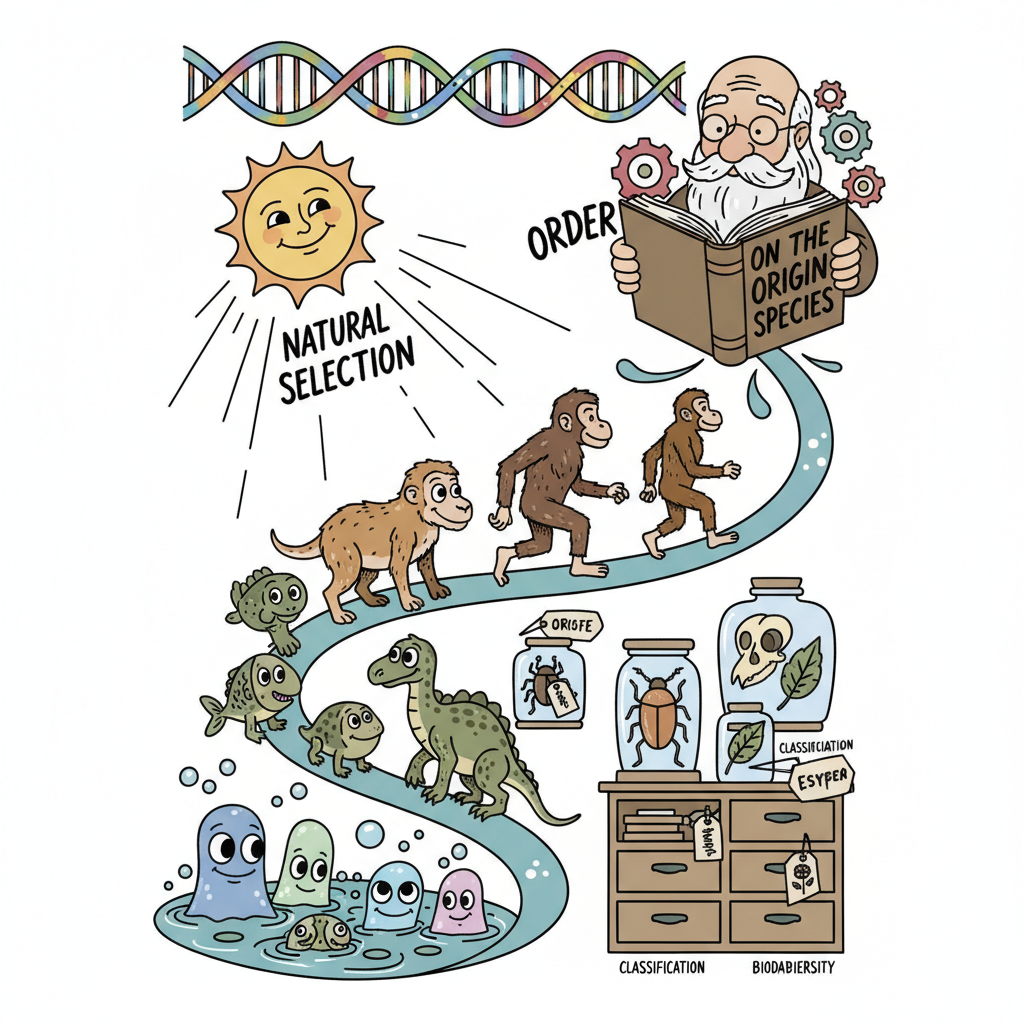
This brings us to a beautiful idea from ancient Indian philosophy. The sages who lived thousands of years ago did not have microscopes or fossil records, but they understood the heartbeat of the universe perfectly. In the darshana (eastern philosophy) of Samkhya, they explained that nature is driven by three distinct forces. One force wants to stay perfectly still and safe. Another force is the chaotic, passionate energy that shakes things up. The third force is the beautiful harmony that emerges from the struggle.
They knew that you cannot reach harmony by sitting still. The peaceful state only arrives after you let the chaotic energy break your rigid boundaries.
And, there is a famous metaphor called Pratibimba, which is an idea of reflection. It asks you to imagine a single moon in the sky reflecting on a quiet lake and a boiling pot of water. When the water boils, the moon looks shattered and wild. When the water is still, the moon looks solid and perfectly whole. Both reflections come from the exact same moon.
The universe is exactly like this. When we look closely at our daily struggles, everything feels like boiling water. We only see the chaos. But if we could somehow zoom out, we would see that this turbulent friction is just the universe expressing its deep, underlying order.
They call it Rta.

Life will never give you the quiet room you are looking for. The unpredictable winds will always find a way to blow through your careful plans. But knowing the stories of those who came before us changes how we feel the wind. The chaos that threatens your current peace is not an enemy trying to destroy you. It is the same evolutionary tension that taught the first fish how to walk. It is the exact same force that Prigogine proved was necessary to build a more complex structure.
The chaos is simply life knocking on your door, asking you to grow.