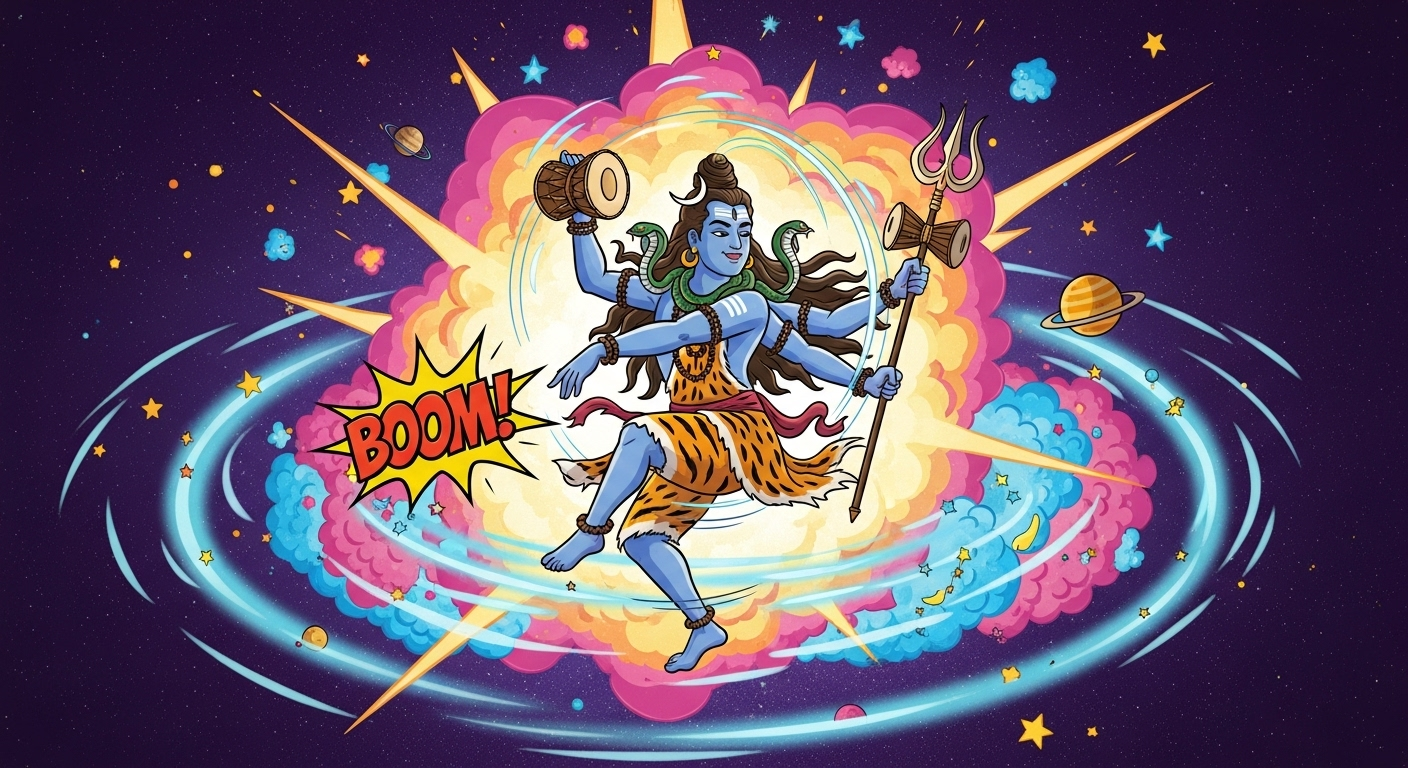
What comes to your mind when you hear the word Tantra?
For many, it’s a word draped in shadow and secrecy. It’s whispered about as some kind of black magic, a shortcut to getting what you want. A way to control a boy or a girl, to force love, or to get revenge. It’s become a caricature of itself.
This is especially true for young people. When you’re navigating the intense world of emotions and attractions, the idea of a secret power can be incredibly tempting.
Related Posts:


Some are drawn to it for all the wrong reasons. Some even think it’s a spiritual pass for free intimacy. It’s almost always framed in some esoteric, dark, or forbidden sense.
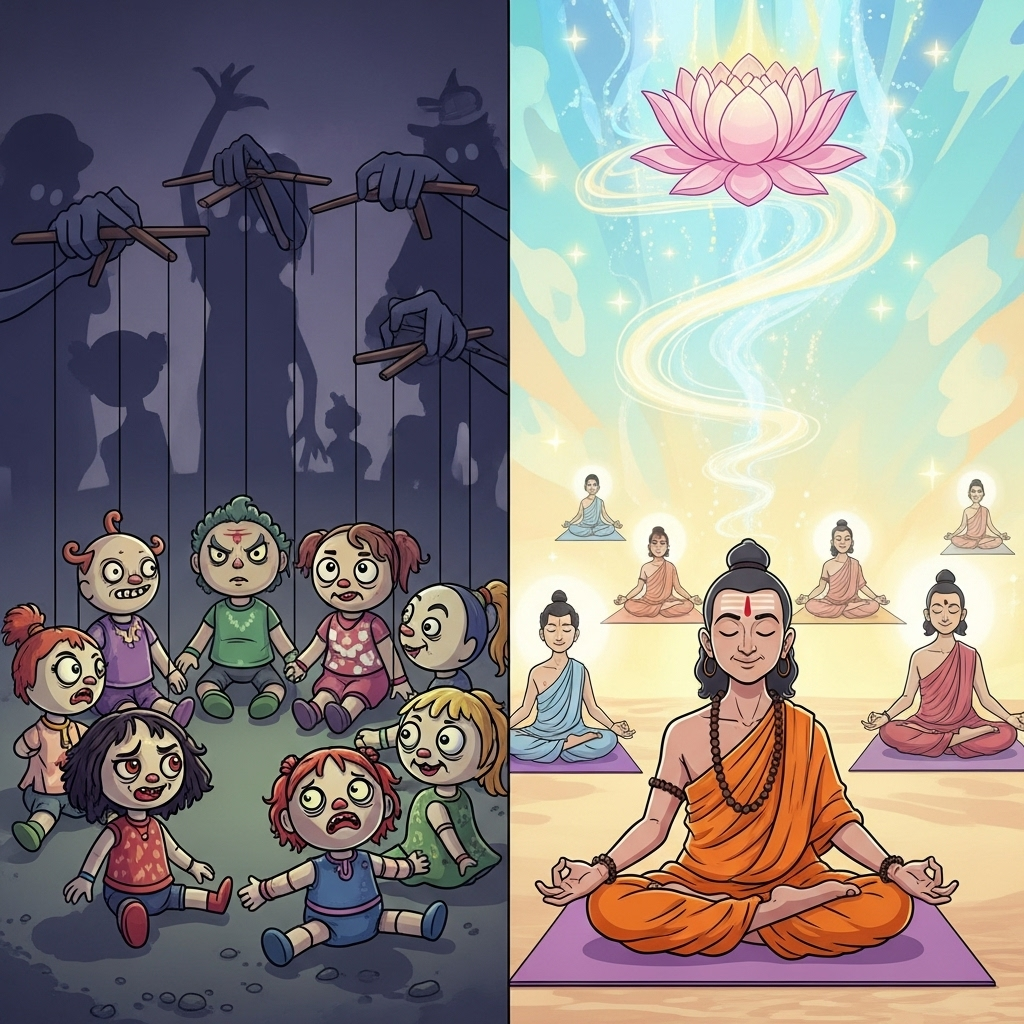
But that’s not it. That’s never been it.
Table of Contents
Tantra and Desires
Tantra is certainly related to desires but that is in a deeper understanding.
It is about desire and its expansion, an expansion so vast that it mirrors the present state of our observable Universe.
Strange, right?
Tantra and the expansion of the Universe, how could these possibly be related?
Think about it. Modern science tells us, with a great deal of certainty, that the Universe is in a constant state of expansion. Every moment, the fabric of spacetime stretches, pushing galaxies further apart.
Now, look within.
What is the one constant force in our own inner world?
Desire.
Our desires are also always expanding. For knowledge, for love, for experience, for life itself.
It’s a perfect correlation between the macrocosm and the microcosm. It’s always the desires that are expanding.
This isn’t just a new idea I’m floating. The ancient seers of this land experienced it. The Nasadiya Sukta of the Rigveda, dares to question the very origin of everything, points directly to this. It says
काम॒स्तदग्रे॒ सम॑वर्त॒ताधि॒ मन॑सो॒ रेत॑: प्रथ॒मं यदासी॑त्।
स॒तो बन्धु॒मस॑ति॒ निर॑विन्दन् हृ॒दि प्र॒तीष्या॑ क॒वयो॑ मनी॒षा
In the beginning, Kāma , the primal desire, the first stirring, arose,
the germ of mind, the seed of conception. The sages, searching with their profound insight, found, within the heart, the relational link of Being within Non-Being.
It means that Desire was the primal seed of the existence that arose in the beginning. This insight, captured thousands of years ago, is the direct “human experience of the Big Bang.” It’s the understanding that the same impulse that birthed galaxies is the impulse that flickers within our own hearts.
Tantra as a Method
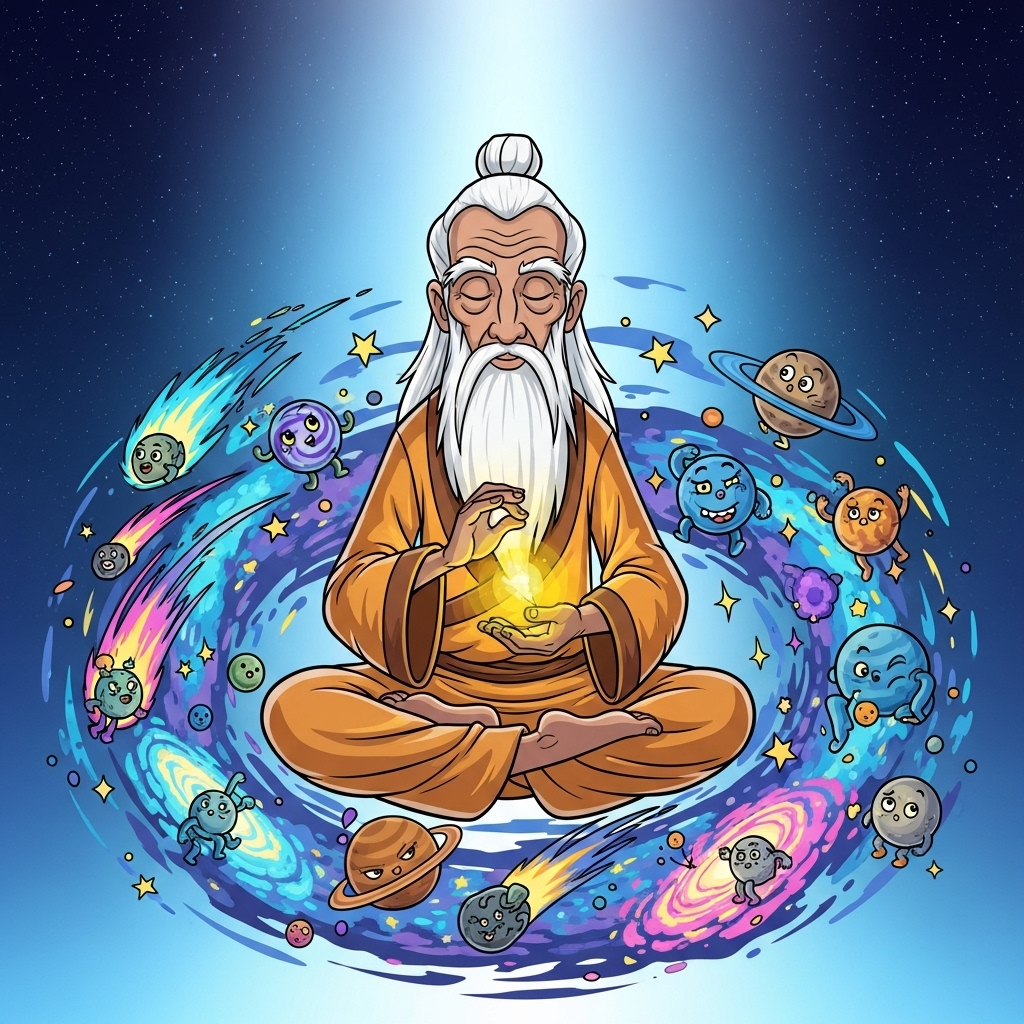
Let’s look at the word itself. Tantra. It comes from two roots: Tan and Tra.
The ‘Tan’ part means to expand, to stretch, to weave. This is the desire and expansion we’ve been talking about. The very nature of existence weaving itself into greater complexity.
The ‘Tra’ part means a tool, an instrument. In the consciousness framework of the Indic traditions, a ‘tool’ is not a hammer or a chisel. A tool is a system, a practice, a methodology, a darshana (a way of seeing). It’s a structured technique for working with reality.
So, Tantra is the ‘tool for expansion.’ It’s the science of working with the expanding force of desire itself.
To understand this better, let’s briefly touch upon Yantra which follows same method of working on with expanding desire.
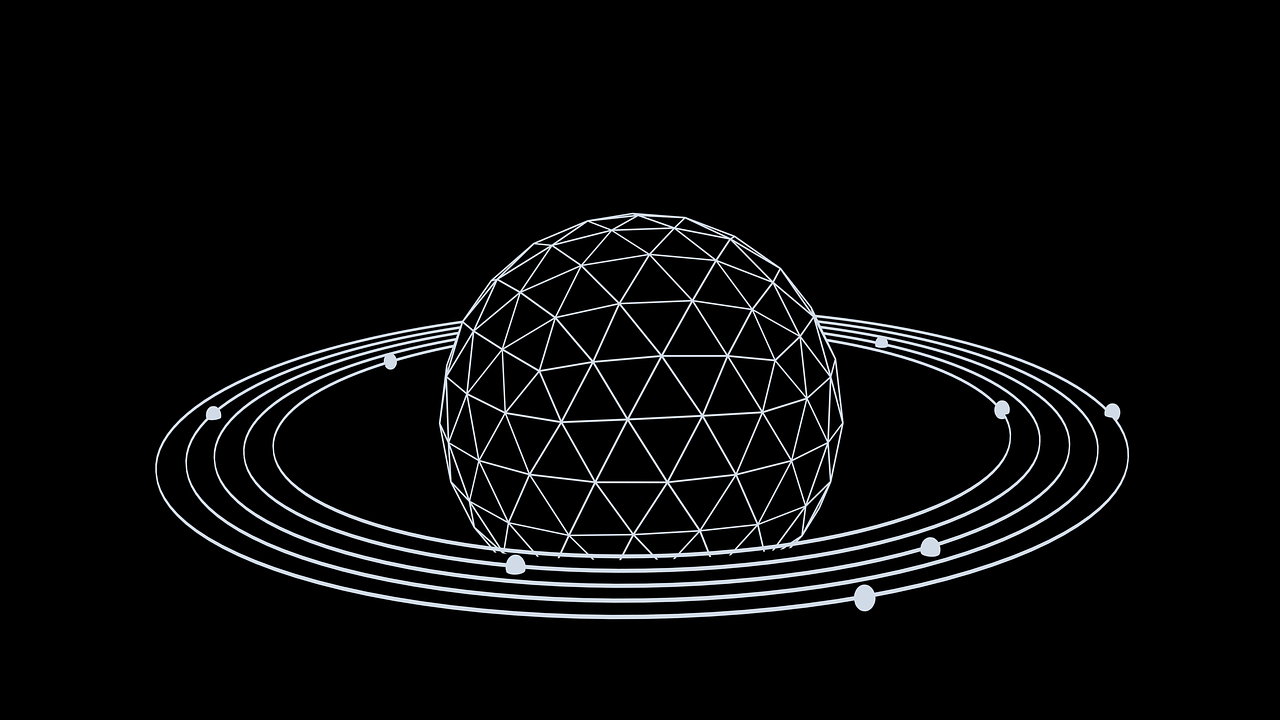
Yantras are visual tools, geometric maps that represent cosmic processes and states of consciousness. The most revered of these is the Sri Yantra.
At the very center of this complex cosmic blueprint sits the divine couple: Maa Tripura Sundari and her consort, Kameshwara.
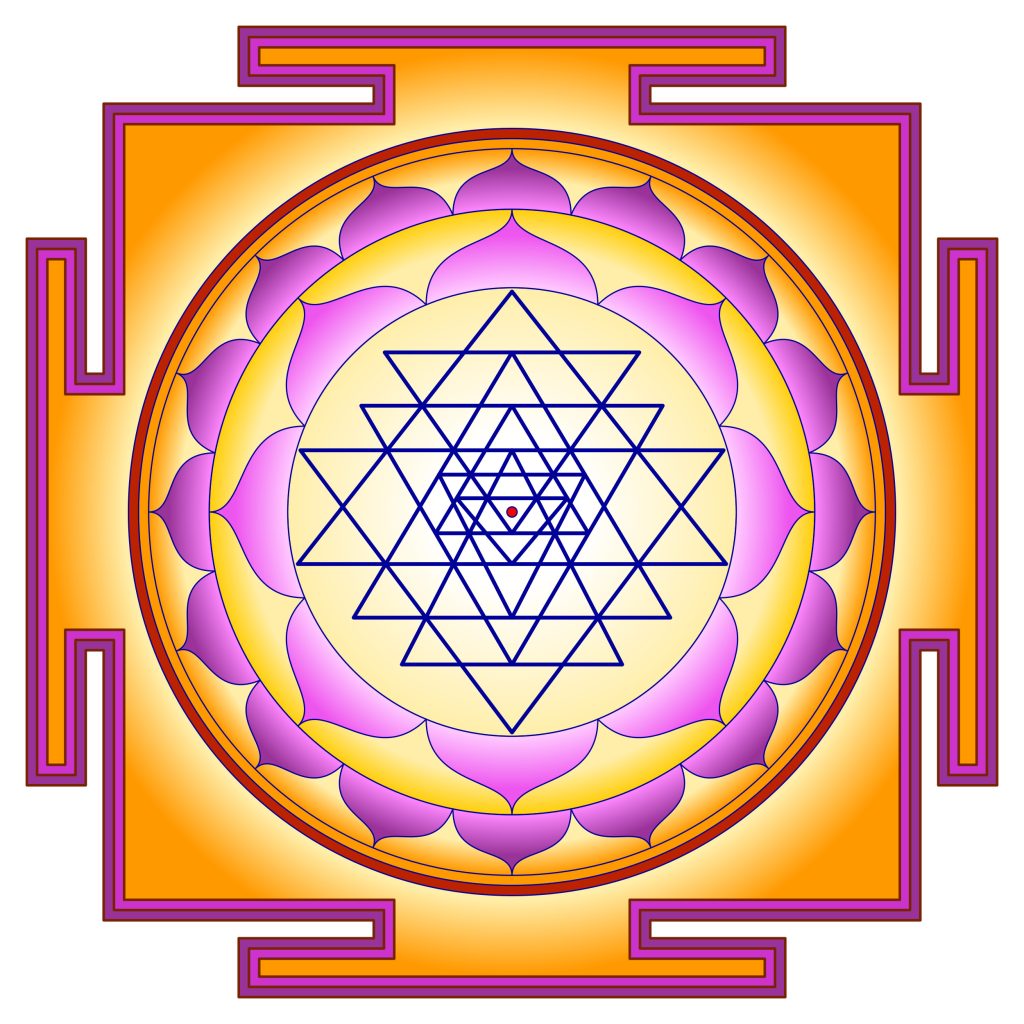
Interesting, right? The queen of the cosmos is the “Most Beautiful of the Three Worlds,” and her king is the “Ishvara of Kama” or Desire.
Let’s unpack this.
Tripura Sundari and Kameshwara
She is Adi Parashakti as per the Shastras. Adi means primordial, the very first. But she is Para, which means supreme, beyond. She isn’t just the first creative energy; she is the source from which the first energy arises. She is the static potential of the entire cosmos.
Her consort is Kameshwara. This is not Kama Deva, the devata of lust. Let’s look at the name: Kama + Ishvara. The loose translation would be Lord of that Primordial Desire which we saw in the Nasadiya Sukta.
It is this divine, cosmic Kama that activates the three Gunas: Sattva, Rajas, and Tamas though Tripura Sundari. To understand them in a modern way, you can think of them as the fundamental operating principles of reality, much like the different types of atomic bonds that create all matter.
It is the constant, quantum-like interplay of these three forces, the clear acceptance of Sattva, the dynamic sharing of Rajas, and the dense inertia of Tamas, that weaves the rich, diverse, and complex fabric of reality.
So, what is the point of the Sadhana (practice) of Maa Tripura Sundari?
It is the practice of converting your small, personal, chaotic desires into a single, focused, greater purpose.
It’s about aligning your individual will with the grand, expansive will of the Universe itself, so that your life becomes a joyful dance in sync with cosmic expansion.
Nataraja, Science and the CERN
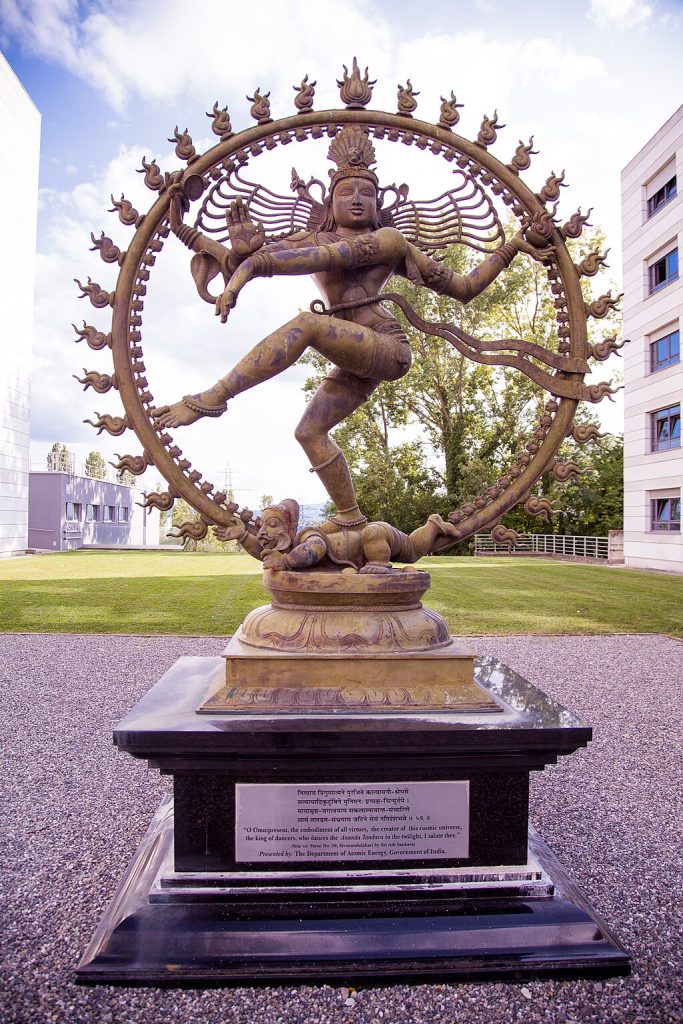
This very concept of a joyful cosmic dance is embodied in the magnificent form of Nataraja, as the cosmic dancer. His dance, the Ananda Tandava, is not just movement of body; it is the rhythmic pulse of the cosmos itself representing the endless cycle of creation, preservation, and dissolution.
This philosophy is so profound that a grand statue of Nataraja stands at the headquarters of CERN in Geneva, the world’s largest particle physics laboratory. The physicists there see in the ceaseless dance of subatomic particles a perfect parallel to Shiva’s cosmic dance, recognizing that the universe is not static but a vibrant, rhythmic interplay of energy.
Think of it as the universe’s operating system written in a single, powerful image. With the vibration of a drum, he sparks creation. With a raised palm, he sustains the cosmos with a gesture of fearlessness.
In another hand, he holds the fire of transformation that dissolves all of existence, only for it to be reborn. All the while, he crushes the dwarf of ignorance underfoot, and his lifted leg offers a path to liberation from illusion.
This is far more than ancient art or mythology.
As the physicist Fritjof Capra famously explained, modern physics has discovered that this very same rhythm of creation and destruction is the essence of all matter. He concluded that for modern physicists, “Shiva’s dance is the dance of subatomic matter.”
Hundreds of years ago, Indian artists created this powerful metaphor. Today, scientists use advanced technology to portray the patterns of the same cosmic dance.
The ancient image and the modern laboratory tell the exact same story: the universe is not a static thing, but a constant, vibrant, and rhythmic dance of energy.
Singular Consciousness’s Expansion
This idea of a singular consciousness desiring to become many is the very heart of Vedanta. Upanishads states it beautifully:
so′kamayata,bahusyamprajayeyeti
It means, “He (the Absolute/Brahman) desired, ‘Let me be many, let me be born.’” The entire universe is the result of this single, divine impulse to multiply and experience itself through countless forms.
So, this cosmic expansion is the outward expression of Brahman. But there is another expansion, an inward one. When we use Tantra to turn our awareness inwards and expand our own consciousness, we are simply reversing the process.
We are the “many” learning to realize our true nature as the “One.” It is the journey home.
But, do you know where this primal desire manifests most powerfully in us?
In our sexual energy. There is no denying this.
Sexual Energy, Inner Heat and Body Temperature
If you are a young person, a young man, can you truly resist looking when a beautiful woman walks by? Even if your mind tries to resist, your eyes are drawn. The same happens for a woman. This is not a moral flaw. This is the raw, creative energy of the universe bubbling up inside you.
Of course, this must be balanced with societal norms and deep mutual respect. Control and dignity are part of a mature society.
That initial spark of attraction is the seed of desire.
Now think about your first love, if you’ve had one. Or else, understand it through the divine play of Radha and Krishna. An initial desire arose when you saw the other person. That desire grew, deepened, and pulled you towards a union.
In a state of deep love and union, if ‘semen retention’ is achieved with a ‘strong awareness’ of each other’s body, not just as physical bodies but as two conscious beings, an incredible heat begins to build in the body. (Please read two highlighted phrases in a mature way)
A flow between energies happen and that divine flow itself is ultimate Kriya Yoga.
This is not merely a biological phenomenon. In the Vedic tradition, this inner fire is seen as the living embodiment of the Grahapatya Agni. The Grahapatya is the sacred household fire, the one that is never allowed to die out. It represents the earth, the body, and the continuity of life.
Just as it is the source fire from which other ritual fires are lit, the sacred union within a household is the source from which life and spiritual warmth emanate.
This principle of generating internal fire, known as Tapas, is a cornerstone of many deep spiritual practices. In Tibetan Buddhism, this is the entire basis of Tummo meditation. Yogis in the Himalayas have famously used this inner heat to dry wet clothes draped over their bodies in the freezing cold.
This is not just folklore. Scientific studies have confirmed the phenomenon. A 2013 study led by Maria Kozhevnikov and published in the journal PLOS ONE (“Neurocognitive and Somatic Components of Temperature Increases during g-Tummo Meditation: Legend and Reality”), for instance, documented significant increases in core body temperature in practitioners of Tummo, proving that the mind can indeed generate physical heat through focused concentration.
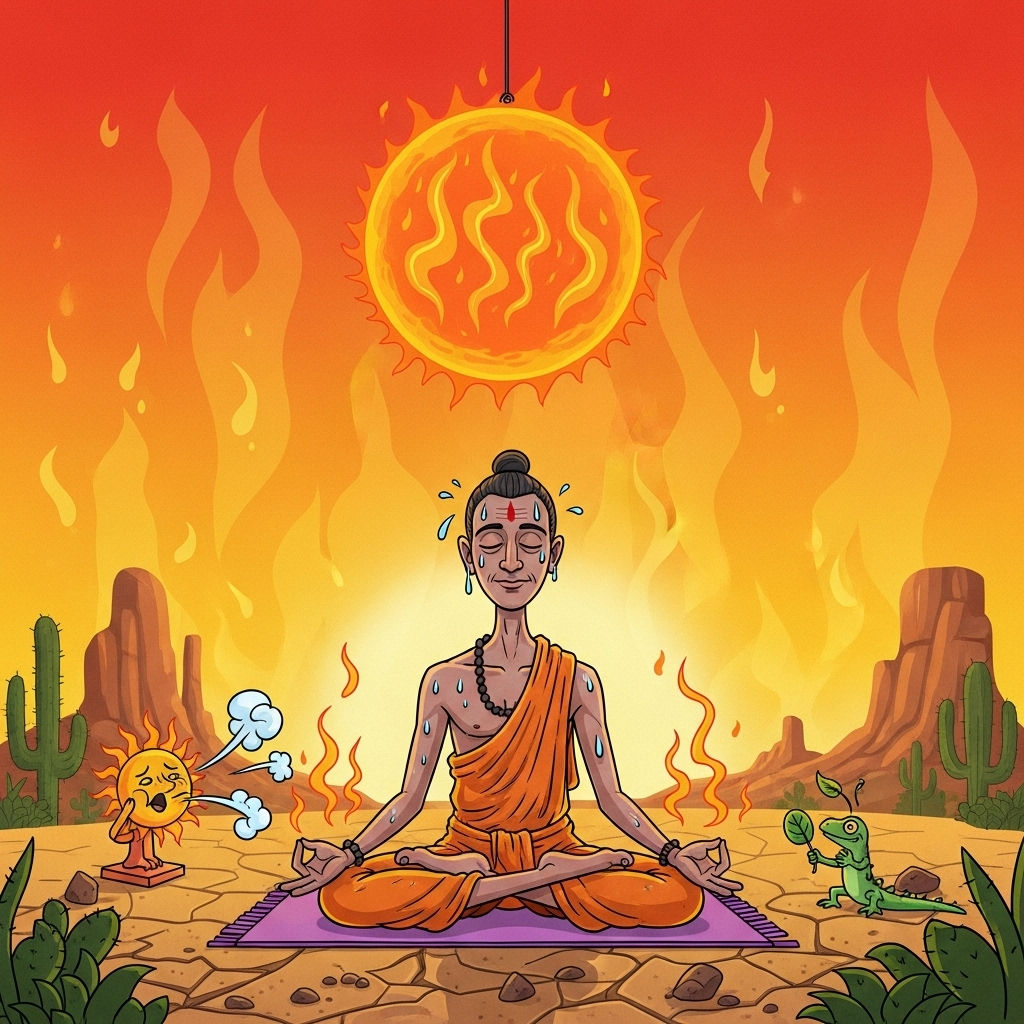
Please note that for advanced yogis physical partner is never needed to generate bodily heat.
This heat is the heat of a true Yajna, a fire sacrifice.
What is the real essence of a physical Yajna?
You offer ghee and herbs into the fire, and the fire transforms their essence, carrying it to the divine. In this inner, Tantric Yajna, your raw sensual energies are the offering. Your shared, heightened awareness has the experience of fire. This fire transforms the gross energy into a sublime spiritual force. In this sacred heat, higher realities are being prepared, things are being created.
Practice of Tantra in Proper Way
Tantra is more about playing with that Energy in a perfect, conscious way. It’s about uniting the masculine and feminine energies within you.
The Sleeping Serpent: Kundalini Shakti is the best example of it. You may read my previous article on Kundalini here for better understanding and come back to this article.
In brief, think of Kundalini not just as a power, but as the universe’s ultimate potential energy, dormant within you. It’s often visualized as a coiled serpent, asleep at the base of the spine in the Muladhara Chakra.
In this sleeping state, its immense creative power is untapped. Tantra provides a systematic and scientific map for awakening this divine feminine energy, this primal Shakti, and guiding it on its journey.
The goal is to guide the awakened energy into the primary central channel, the Sushumna Nadi, which runs along the spine. As Kundalini rises through this channel, it pierces and activates each Chakra (energy center) along the way. Each Chakra it energizes represents the unlocking of different psychological and spiritual potentials, leading to a profound transformation of consciousness.
The final destination for the rising Kundalini is the Sahasrara Chakra, the thousand-petaled lotus at the crown of the head. This is the abode of Shiva, representing pure, static, and undifferentiated consciousness.
When the dynamic, kinetic energy of Shakti finally merges with the static potential of Shiva in the Sahasrara, the individual ego dissolves into the universal. This is the ultimate inner marriage, the final union (Yoga). It’s a state of non-duality (Advaita) and infinite bliss, often described as Sat-Chit-Ananda (Being-Consciousness-Bliss).
To better understand this profound inner union, some traditions use the metaphor and practice of external union. The traditional and most respected path for this is the Grihastha Ashrama (the way of the householder). Within a committed and sacred relationship, intimacy can be transformed into a spiritual practice, allowing partners to understand the interplay of masculine and feminine energies in a safe and grounded way.
In the 20th century, spiritual figures like Osho approached this differently. He taught that fully aware and meditative sexual intimacy, free from guilt and repression, could be a powerful tool to awaken energy. However, this approach is highly controversial.
It’s widely considered impractical and potentially harmful for society at large, as it can be easily misinterpreted as a justification for hedonism rather than the disciplined and sacred practice it was intended to be. The classical path remains focused on internal mastery, using external life as a supportive, not primary, tool.
I am not a fan of Osho’s suggestion to pursue awareness of heat through open sex. He was certainly an enlightened being, but society will never be ready for such a thing due to inherent fear of exposing one’s inner nature in the veil of Maya.
It’s too easily misunderstood and misused.
The Vedic path already gave us the perfect container for this sacred work: the Grihastha Ashrama, the way of the householder. Grapatya Agni can be understood better here only. A committed relationship, a marriage, is the ideal and safest space to understand and be aware of this divine play of energies.
It turns partnership into a profound Sadhana but the requirement is to have a suitable partner if not one should try other Maargas.
Tantra is not what they say it is. It is the sacred science of you. It’s the path of consciously expanding your being until you realize you are, and always have been, the entire Universe, pure, untouched, ever existing and will ever exist till eternity as divine.